
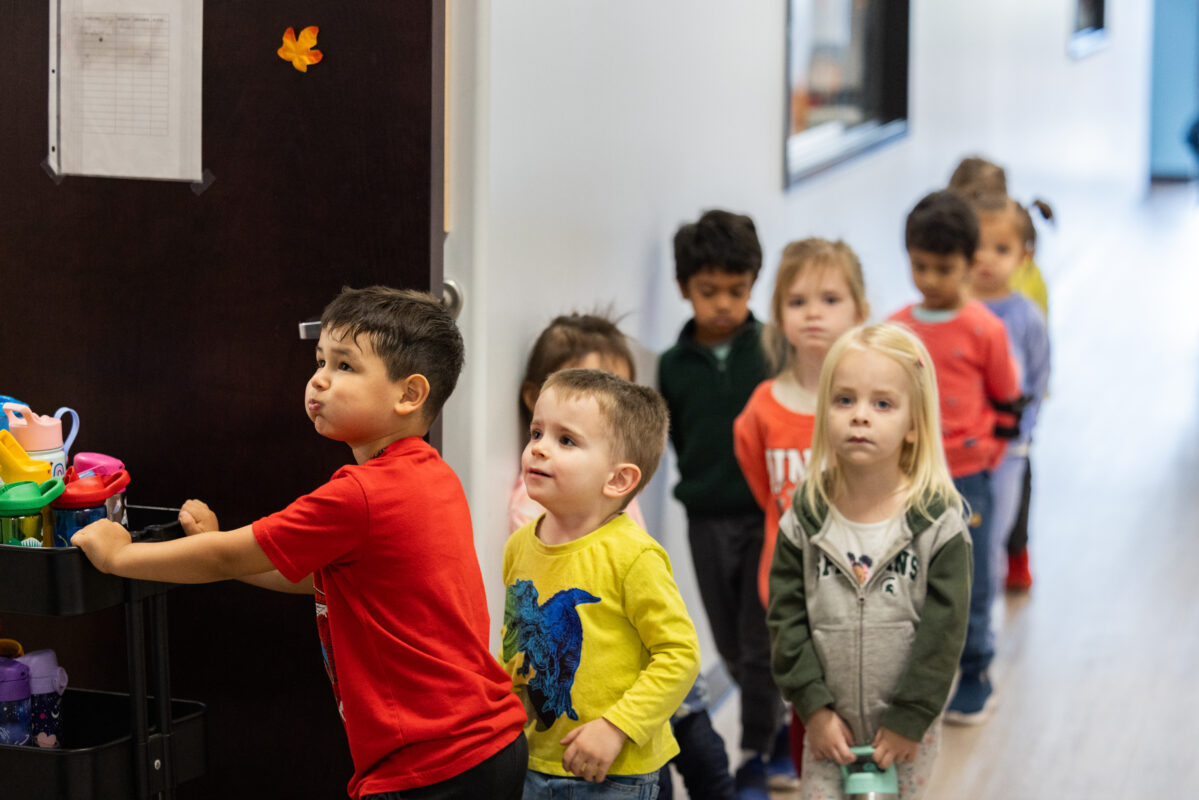
The way a child begins the school day shapes their emotional regulation, focus, and sense of security—especially between ages one and six. In a Montessori environment, drop-off is a purposeful part of the prepared environment. When it is calm, predictable, and respectful, it supports independence, emotional resilience, and belonging.
Maria Montessori observed that young children thrive when clear structure is paired with trust in their capabilities. Montessori drop-off reflects this balance by being brief, warm, and consistent. Rather than lingering, adults offer a confident goodbye, allowing children to orient to familiar routines and move smoothly into meaningful work.
Developmental science supports this approach. Consistent routines help regulate the developing nervous system and reduce cortisol, the body’s primary stress hormone. When children know what to expect, their brains can shift from attachment to exploration, supporting focus, self-control, and learning throughout the day.
Montessori drop-off also aligns with key sensitive periods from birth to age six—particularly for order and independence. Predictable transitions help children feel safe and oriented, while simple responsibilities like entering the classroom, caring for belongings, and greeting the guide send a clear message: You are capable. Research on self-determination theory shows that autonomy builds motivation and confidence, even in very young children.
For toddlers, a calm and confident goodbye supports secure attachment while encouraging emerging independence. Attachment research shows that children take emotional cues from adults; when caregivers demonstrate trust and clarity, children are more likely to feel safe and regulated. For preschoolers, smooth separation allows quick engagement with the classroom community and purposeful work, supporting social development and concentration.
Montessori drop-off works best as a partnership between families and guides. With consistency, trust, and respect for developmental needs, this daily transition becomes a foundation for independence, emotional regulation, and a lifelong love of learning.
