
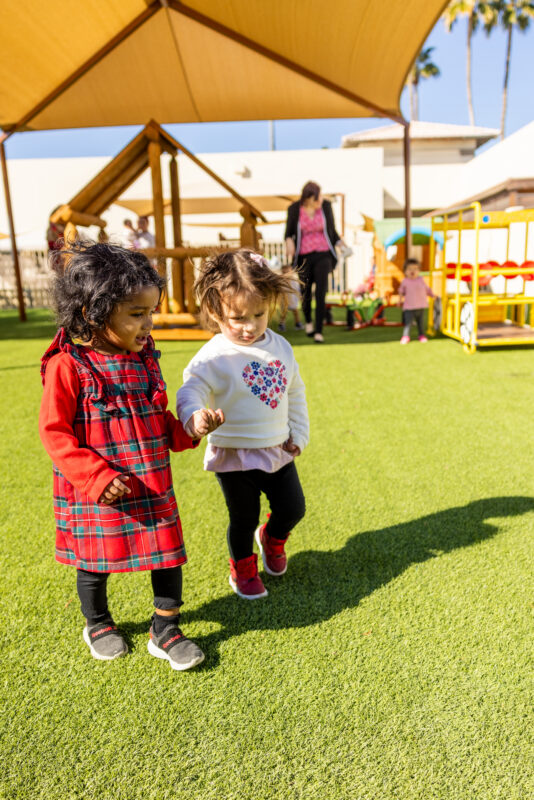
In Montessori education, movement is not separate from learning—it is learning. When toddlers are given the opportunity to walk rather than being carried, they are building far more than physical strength. They are developing independence, confidence, and the neurological foundations for lifelong learning.
Maria Montessori observed that a child’s drive toward movement during the toddler years is part of a powerful sensitive period. From roughly 12 to 36 months, the brain is especially primed to organize movement, balance, and coordination. When toddlers walk at their own pace, stop to observe, or navigate uneven ground, they are actively wiring the brain. Research in developmental neuroscience confirms this, showing that self-initiated movement strengthens neural connections between the motor cortex, cerebellum, and prefrontal areas responsible for planning and self-regulation.
Walking also supports executive functioning. When toddlers walk independently, they practice decision-making, problem-solving, and impulse control. Choosing where to step, how fast to move, or when to stop requires focus and body awareness. Studies link early motor independence with stronger attention, emotional regulation, and cognitive flexibility later in childhood.
From a Montessori perspective, carrying a toddler who is capable of walking unintentionally limits this natural developmental work. While being held offers comfort at times, consistently allowing toddlers to walk communicates trust in their abilities. This trust builds intrinsic motivation and a healthy sense of autonomy. The child learns, “I can do this myself.”
Letting toddlers walk may take more time, but development is not meant to be rushed. By slowing down and allowing movement to unfold naturally, adults support the child’s physical growth, brain development, and emerging independence—exactly as Montessori intended and science now confirms.
